
Website Developers vs. a Web Development Agency: Which Should You Hire?
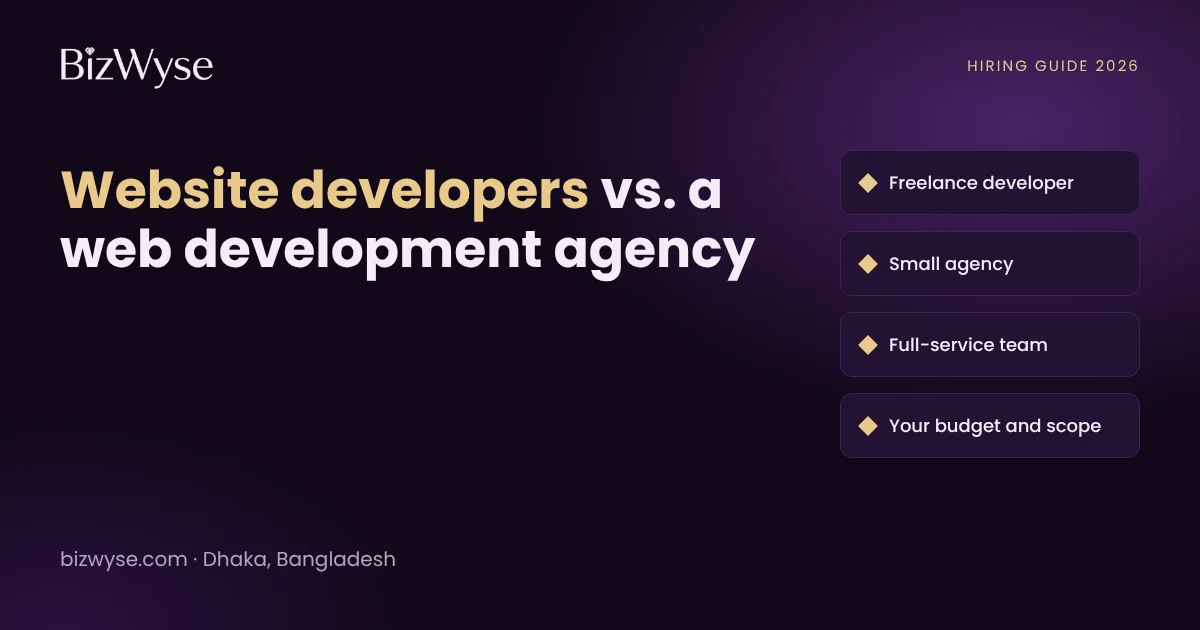
Hire a freelance website developer for small, clearly defined jobs. Hire a web development agency when you need several skills, a larger project or long-term support. Both can deliver excellent work. The right choice depends on your scope, your risk tolerance and who will look after the site after launch.
What each option gives you
A freelance website developer is usually one person who handles most of the build. An agency is a team: designers, developers, project managers and often marketers. Neither is automatically better, but they suit different needs.
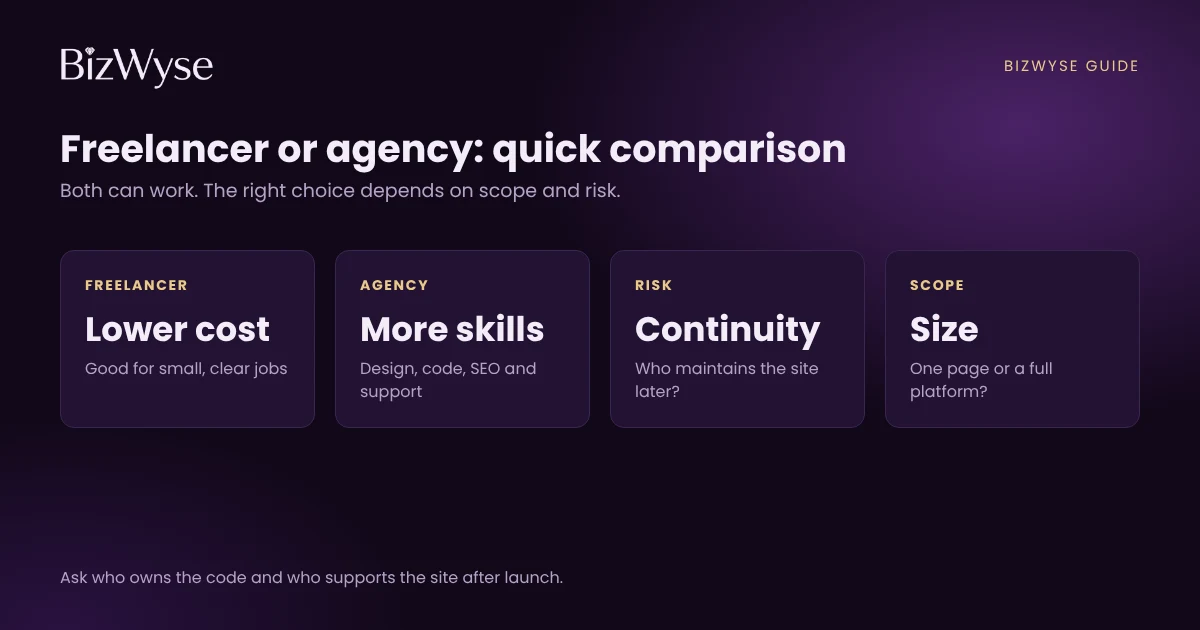
When a freelancer is a good fit
- A small website, landing page or simple store with a clear brief
- A tight budget and a flexible timeline
- You already have the design and content ready
- You can manage the project yourself and review the work
The main risks are availability and continuity. If the developer becomes busy or leaves, you may struggle to find someone who understands the code. Reduce this risk by asking for documentation and owning your hosting and code repository.
When an agency is a better fit
- You need design, development, SEO and tracking together
- The site is large, custom or business-critical
- You want a project manager and a clear process
- You want ongoing maintenance, security and improvements
Agencies cost more per hour, but you get a wider range of skills and a safety net: if one person is unavailable, the project continues. If you want to see how we work, read about our web development company services.
How to compare quotes
Whichever route you choose, compare proposals line by line:
- Number of pages, templates and revision rounds
- Design and branding included or not
- SEO setup, speed targets and mobile testing
- Content entry, training and documentation
- Hosting, backups, security and support after launch
The cheapest quote often leaves out items that another quote lists clearly, so you may pay for them later.
Ownership and handover
Before you sign, confirm in writing that you will own the code, the design files, the domain and the hosting account. Ask for admin access to everything at launch. This protects you whether you work with a freelancer or an agency.
Working across countries and time zones
Many businesses in the UK, Canada, Australia and the USA work with developers in other countries to get strong skills at a fair price. It works well when you agree on a communication rhythm: a weekly call, a shared task board, and written updates. Check that the team can overlap with your working hours for at least a few hours a day.
A simple way to decide
- Is the project small and clear? Start with a freelancer.
- Does it need design, code and marketing? Talk to an agency.
- Will it grow over time? Choose a partner who documents everything.
- Does it affect revenue directly? Prefer a team with support and backup.
Technology choices that affect your future
The technology behind your site influences cost, speed and flexibility. Content-focused sites often work well on WordPress, which lets your team edit pages without code. Performance-critical or highly custom projects may suit modern frameworks. A good developer recommends what fits your goals and explains the trade-offs, instead of pushing the tools they already know.
Ask how the site will be hosted, how updates are handled, and what happens if you want to add features later. Choosing mainstream, well-documented technology makes it easier to hire another developer in the future if you need one.
Questions that reveal quality
- Can I see two or three live websites you built, and what you did on each?
- How do you test speed, mobile layout and security before launch?
- Will the site be built with SEO in mind, including titles, headings and schema?
- Who fixes bugs after launch, and how fast do you respond?
- How do you handle changes to scope once the project starts?
Pay attention to how clearly each person explains things. Developers who can describe their work in plain language usually communicate well during the project, too.
Budgeting beyond the build
A website has ongoing costs: hosting, domain, security updates, backups, small improvements and content. Many businesses forget to plan for these, then find the site outdated within a year. Ask each provider to quote the build and the first year of maintenance separately so you can see the full picture.
Signs you chose well
- You get clear milestones and regular progress updates.
- The developer asks about your business goals, not only about colors and pages.
- You receive documentation and full access to everything at handover.
- The finished site is fast, works well on phones and is easy to edit.
Frequently asked questions
Are freelance website developers cheaper than agencies?
Usually the hourly cost is lower, but total cost depends on scope. A larger project can need design, testing and project management that a freelancer may not cover.
Can I switch developers later?
Yes, if the code is clean, documented and you own the accounts. That is why ownership and handover matter from day one.
How long does a website project take?
A standard business website often takes four to eight weeks, depending on size, content and approval speed.
Next step
Write a one-page brief with your goals, the pages you need and examples you like. Send it to two freelancers and two agencies, then compare their questions as well as their prices. The ones who ask smart questions are usually the ones who deliver.
If you want a second opinion on your current website or marketing, request a free technical audit from Bizwyse. We review speed, SEO and conversion gaps and send back a plain-language report, with no obligation.
Keep reading
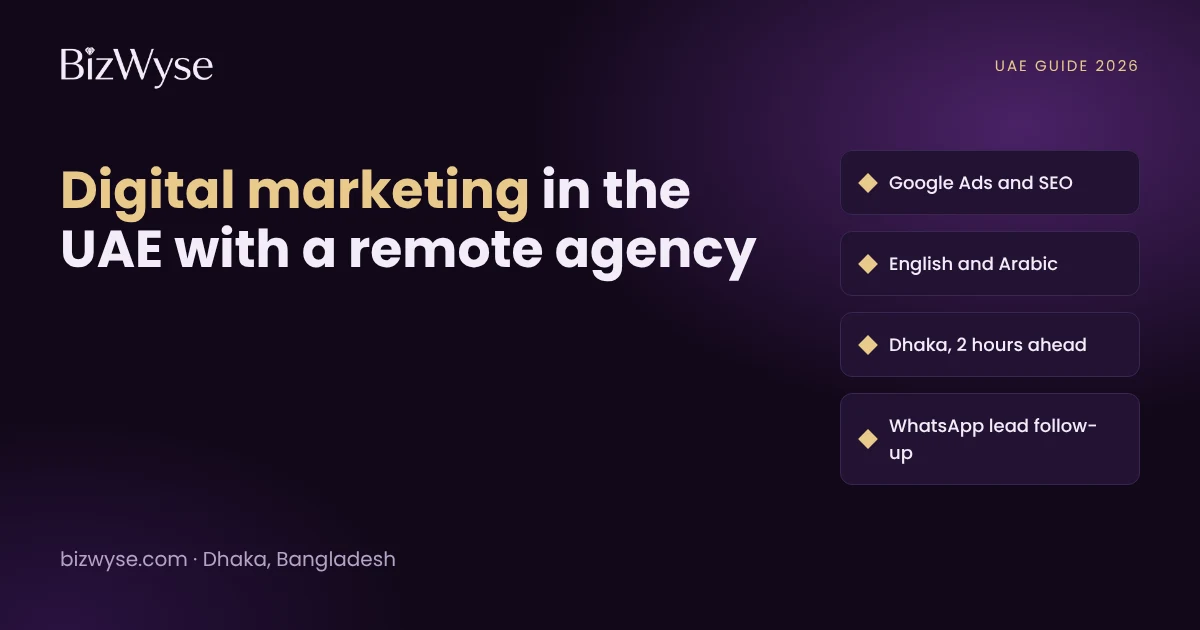
Digital Marketing in the UAE: Working With a Remote Agency
How UAE businesses can work with a remote digital marketing agency: channels, language, reporting and the questions to ask before you start.
Oct 15, 2026 · 5 min read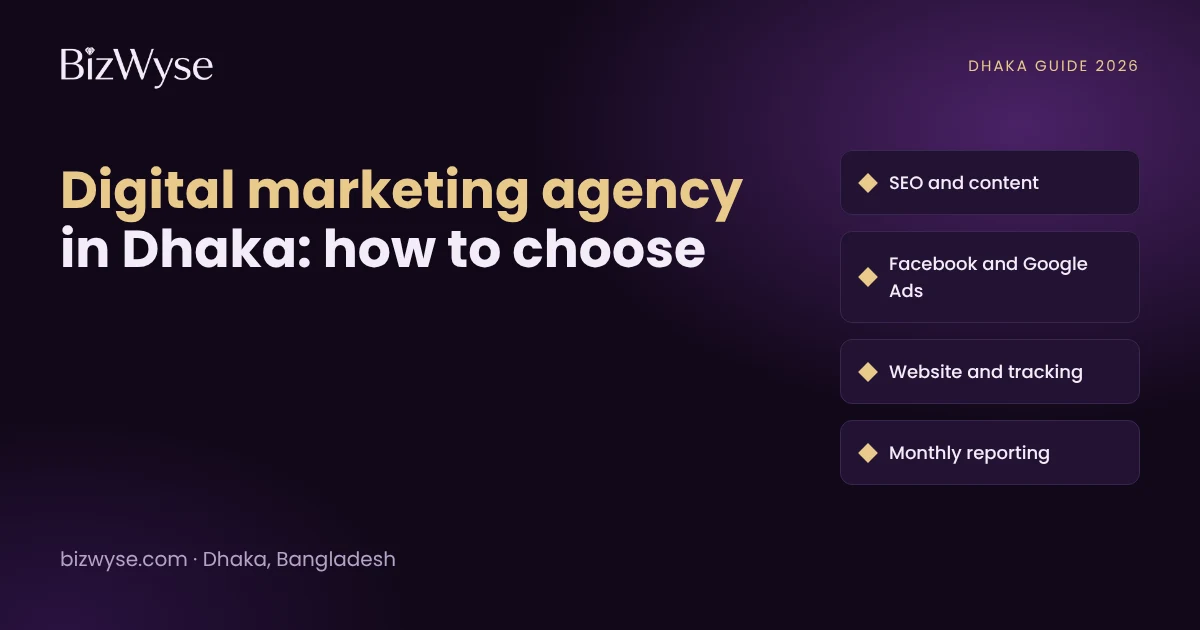
Digital Marketing Agency in Dhaka: Services, Channels and How to Choose
What a digital marketing agency in Dhaka does, which channels fit which goals, and the checks that help you pick the right partner.
Oct 15, 2026 · 5 min read
What Is a Performance Marketing Agency? How It Works and When You Need One
How a performance marketing agency runs paid ads against measurable results, how to read ROAS, and the questions to ask before you hire one.
Oct 15, 2026 · 5 min read